Introduction
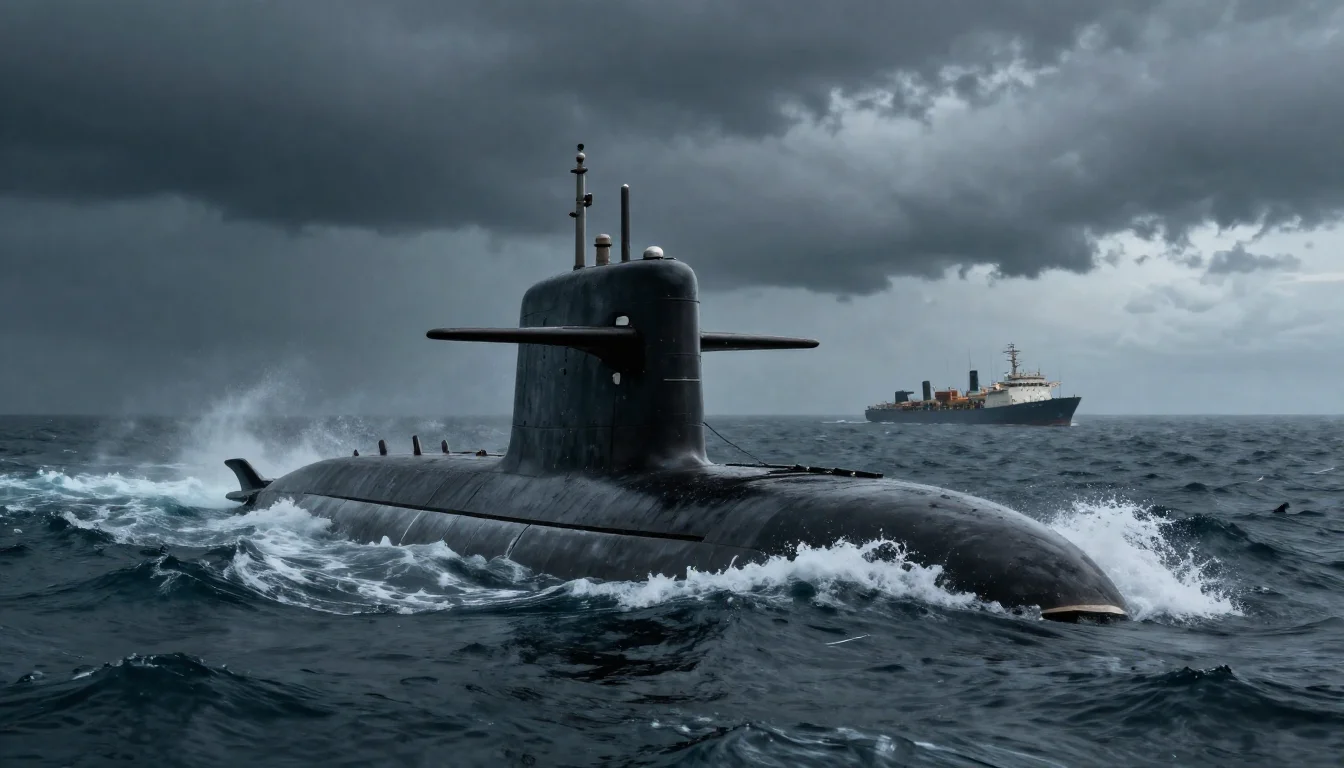
Imagine you are sailing across the Atlantic Ocean during wartime, and you suddenly realize that any ship, including a passenger liner full of families, could become a target without any warning at all. That chilling reality came from a strategy known as unrestricted submarine warfare. This single naval tactic changed how nations fought at sea and sparked debates that still shape international law today.
Unrestricted submarine warfare allowed submarines to attack any ship, military or civilian, without surfacing or issuing a warning first. Germany used this approach during both World War I and World War II, and it reshaped naval combat history in ways nobody fully expected. You will learn why nations turned to unrestricted submarine warfare, how the world reacted, and what lessons it still offers today.
In this article, you will explore the background of unrestricted submarine warfare, the key events that defined it, the reactions it sparked, and the lasting impact it left behind. You will also find expert analysis and answers to common questions people ask about this controversial wartime strategy.
What Happened During Unrestricted Submarine Warfare?
During World War I, Germany announced that its submarines would sink any ship found in British waters without warning. This policy became known as unrestricted submarine warfare. Naval commanders no longer needed to stop a ship, check its cargo, or give passengers time to escape before attacking it.
The Lusitania Disaster
The most infamous incident linked to unrestricted submarine warfare happened in May 1915. A German U-boat, identified as U-20, torpedoed the passenger liner Lusitania off the coast of Ireland. Over a thousand people lost their lives that day, including more than a hundred Americans. This single tragedy shocked the world and turned public opinion sharply against Germany’s use of unrestricted submarine warfare.
World War II Revival
Germany repeated this strategy in World War II, and this time it moved even faster. Adolf Hitler’s navy resumed unrestricted submarine warfare almost immediately after war broke out in 1939. German U-boats targeted merchant ships across the Atlantic Ocean, hoping to cut off vital supplies heading to Britain. This second wave of unrestricted submarine warfare proved even more aggressive than the first, with wolf pack tactics making attacks harder to predict and survive.
Timeline of Key Events
A quick timeline helps you see how unrestricted submarine warfare developed over time. Each stage built on the one before it, and each escalation pushed the world a little closer to total war.
- 1914: World War I begins, and Britain enforces a strict naval blockade against Germany.
- February 1915: Germany officially launches unrestricted submarine warfare around British waters.
- May 1915: A German U-boat sinks the Lusitania, killing more than a thousand people.
- 1916: Germany scales back unrestricted submarine warfare under diplomatic pressure from the United States.
- 1917: Germany resumes unrestricted submarine warfare, hoping to win the war quickly.
- 1939: World War II begins, and German U-boats restart unrestricted submarine warfare almost immediately.
- 1943: Allied technology turns the tide, and losses from unrestricted submarine warfare begin dropping sharply.
Key Details You Should Know
Before going further, here are the core facts that explain unrestricted submarine warfare in simple terms. These details give you a quick snapshot of the strategy and why it mattered so much.
- Unrestricted submarine warfare meant submarines could sink any vessel without surfacing or warning anyone first.
- Germany first adopted unrestricted submarine warfare in February 1915, early in World War I.
- The policy was suspended after international backlash, then reinstated again in 1917.
- Unrestricted submarine warfare directly contributed to the United States entering World War I.
- During World War II, German U-boats sank thousands of Allied ships under this same strategy.
- The Battle of the Atlantic became the largest and longest campaign built around unrestricted submarine warfare.
Notable Vessels and Commanders
Several U-boat commanders became infamous for their role in unrestricted submarine warfare. Their submarines operated in secrecy, striking convoys before retreating into deep water. You can still find detailed accounts of these missions in naval archives and museums dedicated to this period of history.
Background Behind Unrestricted Submarine Warfare
Before unrestricted submarine warfare existed, naval combat followed much stricter rules. Warships had to stop merchant vessels, inspect their cargo, and allow the crew to evacuate safely before sinking them. This older practice was called prize rules, and it was designed to protect civilian lives during wartime.
Why Germany Abandoned the Old Rules
Germany eventually abandoned these older rules because submarines were extremely vulnerable when they surfaced. A U-boat that stopped to inspect a ship risked being attacked by hidden weapons or even rammed by the vessel it tried to search. This vulnerability pushed German naval leaders toward unrestricted submarine warfare as a matter of survival rather than pure aggression.
Britain’s Naval Blockade
Britain’s powerful naval blockade also played a major role in this decision. The British navy worked to choke off food and supplies heading into Germany, and German leaders viewed unrestricted submarine warfare as their most effective counterattack. You can think of it as a desperate response to economic strangulation rather than a strategy chosen out of pure confidence.
The Sussex Pledge and Political Pressure
President Woodrow Wilson strongly opposed unrestricted submarine warfare and demanded that Germany respect the rights of neutral shipping. Germany temporarily agreed to limit unrestricted submarine warfare under what became known as the Sussex pledge of 1916. Military pressure eventually forced a reversal, though, and by 1917 German military leaders convinced Kaiser Wilhelm II that unrestricted submarine warfare offered the only realistic path to victory before American troops could fully arrive in Europe.
Comparing the Two World Wars
The version of unrestricted submarine warfare used in World War I differed in important ways from the version used in World War II. In the first war, Germany hesitated and reversed the policy more than once because of political pressure from neutral nations. In the second war, German commanders committed to unrestricted submarine warfare from the very first days of the conflict, with far less concern about diplomatic consequences.
Technology also changed the picture significantly between the two wars. World War I submarines moved slowly and had limited range, which placed natural limits on how widely unrestricted submarine warfare could be applied. By World War II, improved engines, better torpedoes, and coordinated radio communication allowed German U-boats to carry out unrestricted submarine warfare across a much larger stretch of the Atlantic Ocean.
Reactions to Unrestricted Submarine Warfare
American Public Opinion
The international community reacted strongly to unrestricted submarine warfare. Neutral countries, especially the United States, viewed the policy as a clear violation of basic human rights at sea. American newspapers published graphic accounts of the Lusitania disaster, and this coverage fueled public outrage against unrestricted submarine warfare almost overnight.
Many historians argue that unrestricted submarine warfare became one of the key reasons the United States eventually abandoned neutrality and joined the war effort in 1917. Public sentiment shifted quickly once Americans realized how many civilian lives were at risk.
German Internal Debate
Within Germany itself, reactions to unrestricted submarine warfare were far from unanimous. Naval officers supported the strategy as a necessary weapon against a stronger enemy navy. Some political leaders, on the other hand, worried that unrestricted submarine warfare would provoke America into joining the war, which is exactly what happened.
Allied Response in World War II
During World War II, Allied nations responded to renewed unrestricted submarine warfare by developing convoy systems, improving sonar technology, and increasing long range aircraft patrols over the Atlantic. These innovations slowly turned the tide against German U-boats as the war progressed.
Impact of Unrestricted Submarine Warfare
Unrestricted submarine warfare changed naval combat forever. Before this strategy existed, naval battles mostly involved surface ships facing each other in open view. After unrestricted submarine warfare became common practice, hidden underwater threats turned every single voyage into a dangerous gamble.
Economic and Human Cost
Trade and shipping suffered massive losses because of this strategy. Unrestricted submarine warfare sank millions of tons of cargo over the course of both world wars, crippling supply lines and causing severe shortages of food, fuel, and weapons. The human cost was just as staggering. Thousands of sailors and civilians died because of unrestricted submarine warfare, and many families never recovered the bodies of loved ones lost at sea.
Technological Innovation
Unrestricted submarine warfare also pushed nations to innovate at a rapid pace. Sonar, radar, depth charges, and convoy escort tactics all developed partly as direct responses to this submarine strategy. Even codebreaking efforts, including work on German naval codes, gained urgency because of the constant threat posed by unrestricted submarine warfare.
Lasting Legal Impact
Even international law evolved because of unrestricted submarine warfare. Postwar treaties eventually introduced stricter rules about targeting civilian vessels during conflict, partly as a direct response to the devastation this strategy caused across two world wars.
Effect on Global Trade Routes
Global trade routes never looked the same once unrestricted submarine warfare became a regular threat. Shipping companies had to reroute vessels, slow down convoys, and accept much higher insurance costs just to keep goods moving safely. Many experts believe unrestricted submarine warfare delayed wartime production schedules in several regions, since raw materials simply could not arrive on time.
Wolf Pack Tactics Explained
During World War II, German commanders refined unrestricted submarine warfare through a method known as wolf pack tactics. Multiple U-boats worked together to locate a convoy, then attacked from several directions at once. This coordinated version of unrestricted submarine warfare made it much harder for escort ships to defend every vessel in a convoy at the same time.
Expert Analysis on Unrestricted Submarine Warfare
Effectiveness Versus Ethics
Naval historians often describe unrestricted submarine warfare as a genuine turning point in modern military ethics. Experts argue that it blurred the line between combatants and civilians on a massive scale for the very first time in naval history. According to many military strategists, unrestricted submarine warfare proved highly effective at disrupting enemy supply chains, even though it came with serious political risks attached.
Some analysts believe unrestricted submarine warfare ultimately backfired on Germany because it pushed powerful neutral nations toward the opposing side of the conflict. I find it fascinating how unrestricted submarine warfare forces you to weigh military effectiveness against moral responsibility, and it is a debate that still applies to modern warfare decisions today.
Why Experts Still Study It
Modern defense experts frequently study unrestricted submarine warfare when analyzing how new technology can outpace existing rules of engagement. Understanding this history helps current military planners think more carefully about the limits they place on emerging weapons systems.
What’s Next? The Legacy of Unrestricted Submarine Warfare
Modern Naval Rules
Although unrestricted submarine warfare belongs to history now, its lessons remain very relevant. Modern naval forces still study this strategy when developing rules for autonomous weapons and underwater drones. International law has changed significantly since unrestricted submarine warfare first appeared in World War I, and treaties now clearly define how submarines must treat civilian and merchant vessels during conflict.
Autonomous Underwater Vehicles
Many defense analysts wonder whether something resembling unrestricted submarine warfare could emerge again, this time using unmanned underwater vehicles instead of crewed submarines. You can already see early echoes of unrestricted submarine warfare in modern debates about cyber warfare and drone strikes, where new technology once again challenges old rules of engagement.
Understanding unrestricted submarine warfare helps you appreciate why today’s military planners care so deeply about clear rules during armed conflict, especially as technology keeps changing faster than international law can keep pace.
Conclusion
Unrestricted submarine warfare reshaped naval history and forced the entire world to rethink the rules of war. From the sinking of the Lusitania to the brutal Battle of the Atlantic, this strategy proved both effective and devastating at the same time. You now understand why nations adopted unrestricted submarine warfare, how the world reacted, and what lasting impact it left behind for future generations.
What do you think? Should military effectiveness ever outweigh civilian safety during wartime? Share your thoughts in the comments below, and feel free to pass this article along to anyone curious about unrestricted submarine warfare and its place in history.
Common Misconceptions About Unrestricted Submarine Warfare
A few myths still surround unrestricted submarine warfare, so it helps to clear them up before moving on to the FAQ section below.
- Myth: Only Germany ever used this strategy. While Germany is the most famous example, other navies experimented with limited versions of unrestricted submarine warfare during global conflicts.
- Myth: Unrestricted submarine warfare only targeted military ships. In reality, civilian and merchant vessels made up a large share of the targets hit under this policy.
- Myth: The strategy always worked as planned. Although unrestricted submarine warfare disrupted supply lines, it also triggered political backlash that hurt Germany’s broader war goals.
Frequently Asked Questions
What is unrestricted submarine warfare?
Unrestricted submarine warfare is a wartime strategy that allows submarines to attack any ship without warning, including civilian and merchant vessels.
Why did Germany use unrestricted submarine warfare?
Germany used unrestricted submarine warfare to disrupt Allied supply lines and counter Britain’s naval blockade during both World War I and World War II.
Did unrestricted submarine warfare cause the United States to enter World War I?
Yes, unrestricted submarine warfare, especially the sinking of the Lusitania, played a major role in pushing the United States toward joining the war.
Was unrestricted submarine warfare considered illegal at the time?
Unrestricted submarine warfare violated traditional naval rules of engagement, though international law later developed clearer regulations specifically addressing it.
How did Allied nations respond to unrestricted submarine warfare?
Allied nations responded to unrestricted submarine warfare by creating convoy systems, improving sonar technology, and increasing aerial patrols over the Atlantic.
Is unrestricted submarine warfare still used today?
Modern international law restricts unrestricted submarine warfare, though military experts continue studying its lessons for current naval strategy and technology.
About The Author
Ethan Wallace writes about military history and naval strategy, with a focus on how wartime decisions shaped modern international law. He has spent years researching World War I and World War II naval campaigns and enjoys turning complex historical events into clear, engaging stories for everyday readers .
Also read miserdefinition.com
Email: johanharwen314@gmail.com
Author Name: Johan Harwen