Introduction
You have probably typed 🗿 into a chat without stopping to think about it. That grey stone face pops up in comments, memes, and texts everywhere, yet most people never learn the real moai emoji meaning behind it. You send it when a joke falls flat, when you want to look tough, or when you simply have nothing else to say. This article breaks down the full moai emoji meaning, from its ancient roots on Easter Island to its modern life on TikTok and Twitter.
By the end, you will understand where this emoji came from, what it signals in different conversations, and why the moai emoji meaning keeps shifting as new generations pick it up. We will also cover its history, its cousin the Moyai statue in Tokyo, and answer the most common questions people ask about it. Let us get into it.
What Is The Moai Emoji Meaning At Its Core
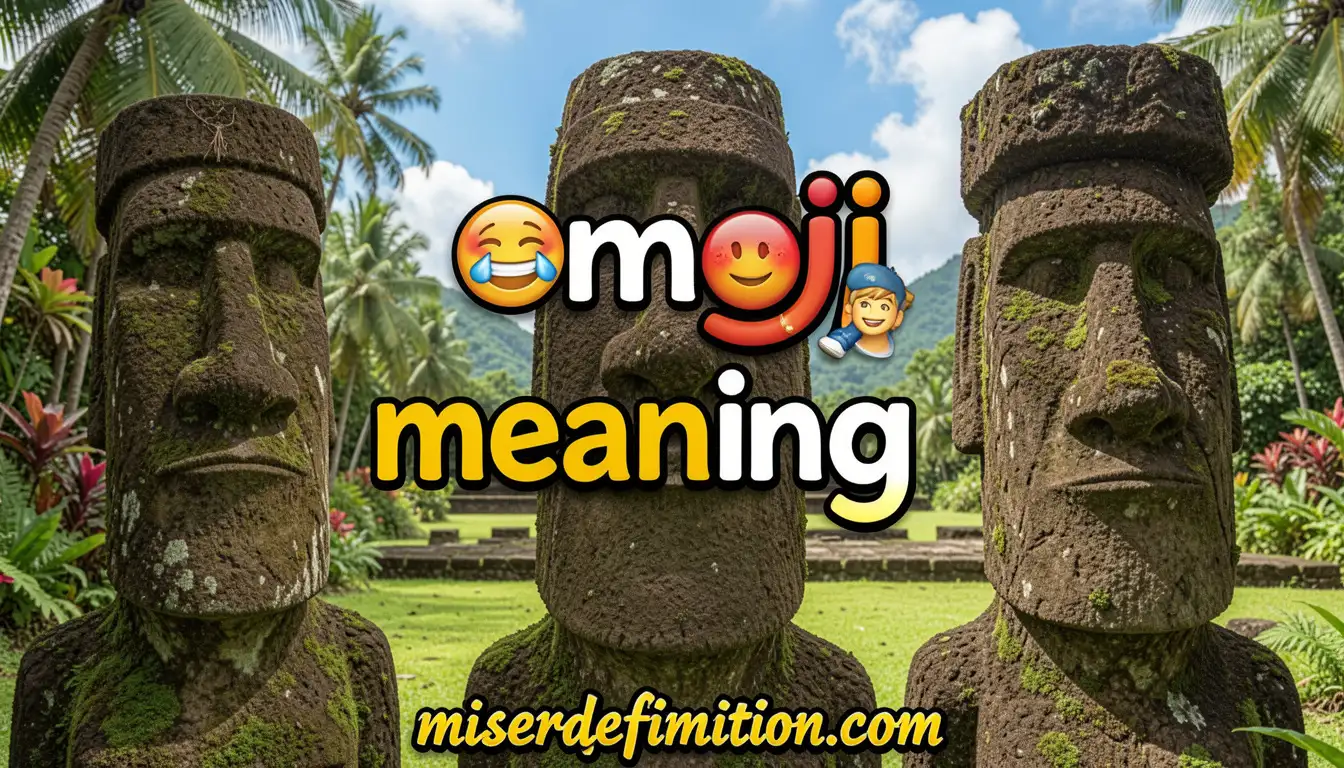
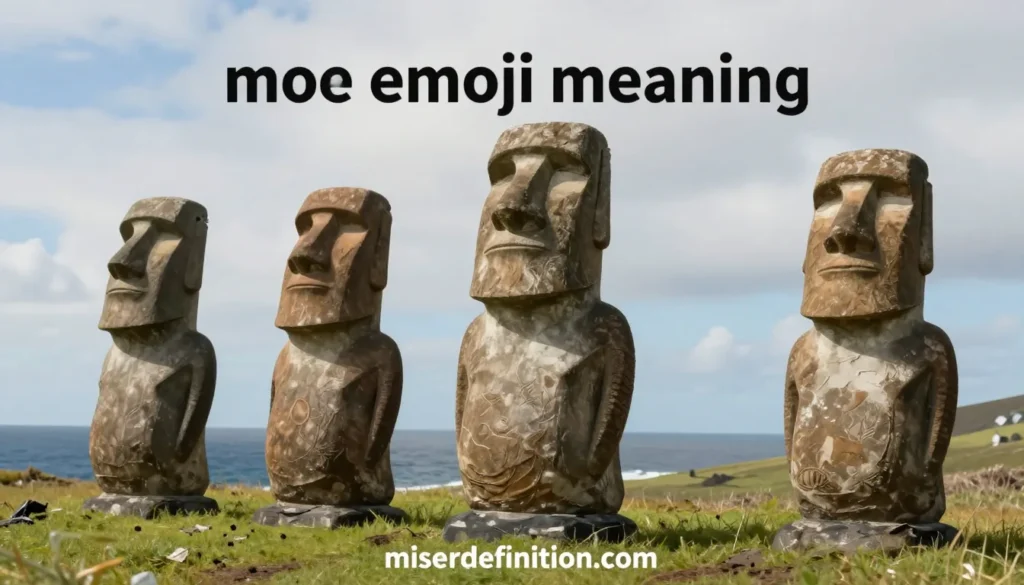
The moai emoji meaning starts with a picture. The emoji 🗿 shows a grey face with a heavy brow, a long nose, and no visible mouth expression. It looks carved from stone, and that is exactly the point. Most platforms design this emoji to resemble the moai statues found on Easter Island, a remote spot in the Pacific Ocean that belongs to Chile.
At its simplest, the moai emoji meaning points to strength, silence, and endurance. People use it when words feel unnecessary. A stone face does not smile, cry, or react, so the emoji works well whenever someone wants to show a flat, unreadable expression instead of a typical smiley face.
The Real Origin Behind The Moai Emoji Meaning
To understand the moai emoji meaning fully, you need to look back at actual history. The real moai statues sit on Rapa Nui, better known as Easter Island. Carvers built almost nine hundred of these figures between 1250 and 1500, using volcanic rock pulled from a single quarry. Each statue represents the face of a deified ancestor, and many stand along the coast facing inland toward the communities that made them.
Here is where the moai emoji meaning gets interesting. The official Unicode name for this emoji is not moai at all. It is called Moyai. That name points to a completely different statue, one that stands near Shibuya Station in Tokyo, Japan. Nii-jima Island gave that statue to Tokyo as a gift, and its design borrows heavily from the Easter Island originals, though it has fuller lips and a hint of hair carved into the stone.
So when people search for the moai emoji meaning, they are really asking about two statues at once. One is thousands of years old and sits on a remote Pacific island. The other is a modern piece of public art in a busy Japanese train station. Unicode approved the emoji back in 2010 as part of Unicode 6.0, and it joined the wider emoji keyboard in 2015. Knowing this backstory gives the moai emoji meaning far more depth than a quick glance at the emoji keyboard ever could.
How Gen Z Changed The Moai Emoji Meaning
The moai emoji meaning did not stay locked into its original definition for long. Gen Z picked up the stone face and gave it a fresh purpose. Instead of using it to reference ancient statues or Japanese landmarks, people now use it to express a deadpan, unbothered reaction.
Think about the last time someone said something awkward or slightly rude in a group chat. Instead of typing a full sentence, you can drop 🗿 and let the silence do the talking. This shift changed the moai emoji meaning from a cultural reference into a full blown internet reaction.
Here are the most common ways people apply the moai emoji meaning today.
- Deadpan reaction: Someone says something dry or sarcastic, and you reply with 🗿 to show you are unimpressed.
- Stoic strength: You use it to show toughness, similar to how people once used the flexed bicep emoji.
- Sigma or chad energy: Many memes tie the moai emoji meaning to internet slang about confidence and detachment.
- Disapproval: People send it instead of an eye roll when they think someone said something silly.
- Silence: It works as a stand in for “I have nothing to say” or “this is awkward.”
I have noticed that younger users treat the moai emoji meaning almost like a punctuation mark. It closes out a thought without adding extra words, which fits perfectly with how fast modern texting moves.
Moai Emoji Meaning In Memes And Pop Culture
Meme culture pushed the moai emoji meaning even further into the mainstream. Sites that track internet trends noted a sharp rise in its use once TikTok comment sections adopted it as a go to reaction. Video game communities also picked it up, since players began comparing large stone heads found in games like Fortnite to the real Easter Island statues.
Music fans added another layer to the moai emoji meaning as well. Fans of Japanese and Korean pop groups often pair the stone face with flags or other cultural emojis to represent themes of strength and heritage. Boxing and wrestling fan accounts sometimes use it too, pairing it with terms like Stone Cold or The Rock to hint at toughness.
Why People Misread The Moai Emoji Meaning
Some people still mix up the moai emoji meaning with something completely unrelated, like a mysterious island landmark or a video game asset. Others assume the emoji always signals anger, when in fact it usually signals calm detachment rather than hostility.
If you want to use the moai emoji meaning correctly, pay attention to tone. A stone face rarely means someone is furious. It almost always signals a flat, unreadable, or sarcastic response instead of genuine anger. Reading the surrounding text will tell you far more than the emoji alone.
How To Use The Moai Emoji Meaning In Daily Chats
You do not need to overthink the moai emoji meaning when you text friends. Drop it after a joke that did not land. Use it when a friend says something bold and you want to show quiet respect. Send it solo when words genuinely feel unnecessary.
A few quick examples show the moai emoji meaning in action.
- Friend: “I just ate a whole pizza by myself.” You: 🗿
- Coworker: “The meeting got moved to 7am again.” You: 🗿
- Sibling: “I told mom it was your fault.” You: 🗿
Each example leans on the moai emoji meaning to replace a full sentence with a single, expressive symbol.
Quick Recap Of The Moai Emoji Meaning
Before moving on, here is a fast recap of the moai emoji meaning in one place.
- It references real stone statues from Easter Island.
- It also nods to the Moyai statue near Shibuya Station in Tokyo.
- It signals deadpan humor, strength, or silence in modern texting.
- It rarely, if ever, signals genuine anger.
Keep this quick list handy whenever you forget the full moai emoji meaning mid conversation.
Frequently Asked Questions
What does the moai emoji mean in texting? The moai emoji meaning in texting usually points to a deadpan, sarcastic, or unbothered reaction rather than any specific emotion.
Where does the moai emoji come from? The moai emoji meaning traces back to real stone statues on Easter Island, though its official Unicode name references a similar statue in Tokyo called Moyai.
Is the moai emoji the same as the stone face emoji? Yes, people often call it the stone face emoji, and both names describe the same grey, expressionless emoji.
Why do Gen Z use the moai emoji so much? Gen Z embraced the moai emoji meaning as a way to react without words, especially in comment sections and group chats where a flat reaction feels funnier than a typed response.
Does the moai emoji mean anger? No. The moai emoji meaning leans toward silence, sarcasm, or stoicism rather than anger.
What is the difference between moai and Moyai? Moai refers to the ancient statues on Easter Island, while Moyai refers to the Tokyo statue that inspired the official emoji name, though the emoji itself blends both meanings.
When was the moai emoji added to phones? The emoji entered Unicode in 2010 and became widely available on emoji keyboards by 2015, and its popularity grew steadily from there.
Can I use the moai emoji in a professional setting? It is best to avoid it in formal messages, since the moai emoji meaning leans casual and is best suited for texts, comments, and social media.
Conclusion
The moai emoji meaning covers more ground than most people expect. It started as a nod to ancient Easter Island statues, picked up a second identity through a Tokyo landmark, and now lives a whole new life as a symbol of deadpan humor and quiet strength. Once you understand the full moai emoji meaning, you will notice it everywhere, from comment sections to group chats to meme pages.
Next time someone sends you a joke that falls flat, you will know exactly what that little grey stone face is trying to say. Try dropping the moai emoji meaning into your own conversations and see how your friends react. Got a favorite way to use it? Share this article with someone who still thinks it is just a random rock.
About The Author
Maya Reyes writes about internet culture, social media trends, and digital language for several online publications. She spends her free time tracking how slang and emojis evolve across platforms and enjoys breaking down internet trends into simple, everyday explanations.
miserdefinition.com
Email: johanharwen314@gmail.com
Author Name: Maya Reyes