Introduction: The Biggest World Cup Ever
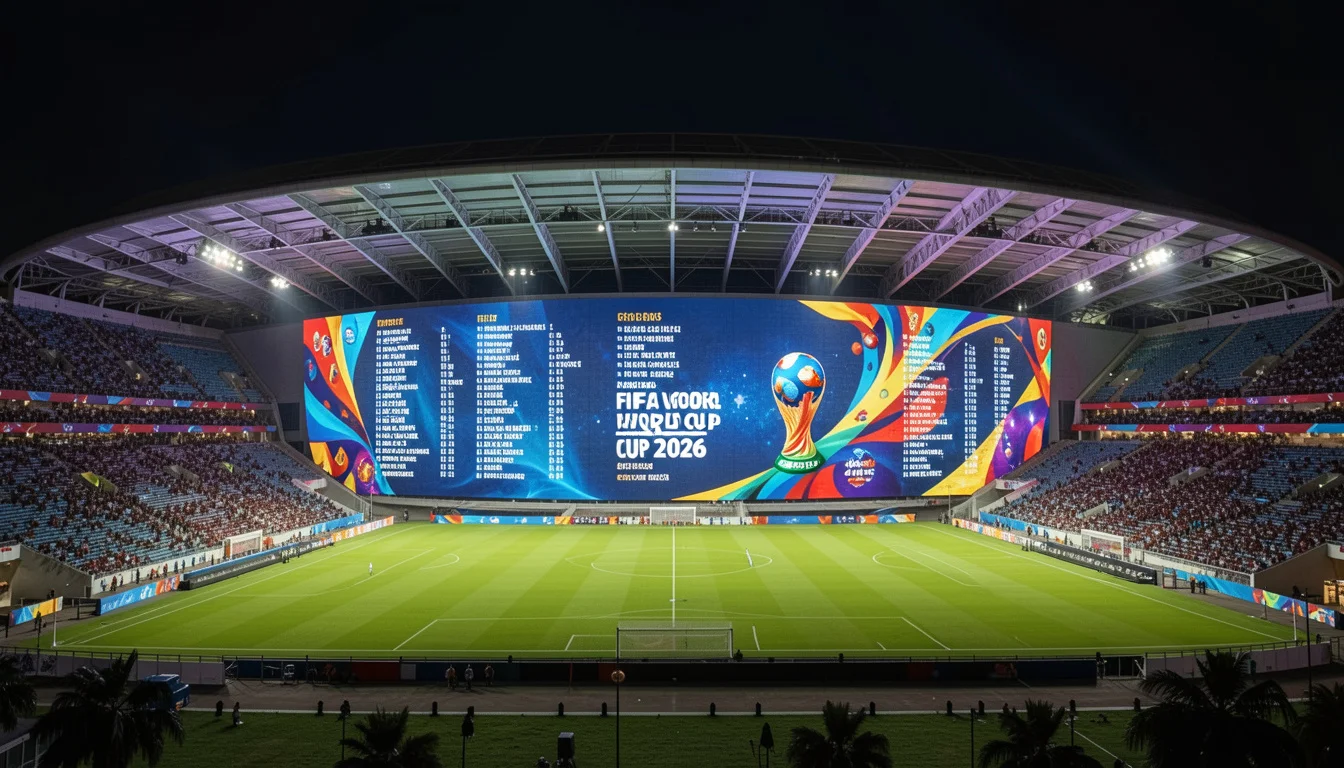
If you love football, you already know that 2026 is not just another year. The FIFA World Cup 2026 is unlike anything the sport has ever seen. For the first time in history, three countries — the United States, Canada, and Mexico — are co-hosting the tournament together. The action runs from June 11 to July 19, 2026, and it covers 16 incredible FIFA World Cup 2026 Stadiums List spread across an entire continent.
This is also the first World Cup with 48 national teams competing. That means 104 matches, more drama, more surprises, and more unforgettable moments. From the legendary Estadio Azteca in Mexico City to the futuristic SoFi Stadium in Los Angeles, every venue on this list tells a story.
In this article, you will find every detail you need about all 16 FIFA World Cup 2026 stadiums — their capacities, key matches, unique features, and tips to help you make the most of this historic tournament. Whether you plan to attend in person or watch from home, knowing your venues makes the experience so much richer.
Quick Overview: FIFA World Cup 2026 Stadiums List All 16 Stadiums at a Glance
Here is a complete table of all 16 FIFA World Cup 2026 Stadiums List, their host cities, approximate capacities, and countries:
| # | Stadium (FIFA Name) | City | Country | Approx. Capacity |
|---|---|---|---|---|
| 1 | New York New Jersey Stadium (MetLife) | East Rutherford, NJ | USA | 82,500 |
| 2 | Dallas Stadium (AT&T Stadium) | Arlington, TX | USA | 80,000–94,000 |
| 3 | Los Angeles Stadium (SoFi Stadium) | Inglewood, CA | USA | 70,240 |
| 4 | Atlanta Stadium (Mercedes-Benz Stadium) | Atlanta, GA | USA | 75,000 |
| 5 | Miami Stadium (Hard Rock Stadium) | Miami Gardens, FL | USA | 65,326 |
| 6 | Seattle Stadium (Lumen Field) | Seattle, WA | USA | 69,000 |
| 7 | Kansas City Stadium (Arrowhead Stadium) | Kansas City, MO | USA | 72,330 |
| 8 | Houston Stadium (NRG Stadium) | Houston, TX | USA | 72,000 |
| 9 | Boston Stadium (Gillette Stadium) | Foxborough, MA | USA | 65,878 |
| 10 | Philadelphia Stadium (Lincoln Financial Field) | Philadelphia, PA | USA | 69,796 |
| 11 | San Francisco Bay Area Stadium (Levi’s Stadium) | Santa Clara, CA | USA | 68,500 |
| 12 | Mexico City Stadium (Estadio Azteca) | Mexico City | Mexico | 83,000 |
| 13 | Guadalajara Stadium (Estadio Akron) | Zapopan | Mexico | 46,232 |
| 14 | Monterrey Stadium (Estadio BBVA) | Guadalupe | Mexico | 51,350 |
| 15 | Toronto Stadium (BMO Field) | Toronto, ON | Canada | 45,000 |
| 16 | Vancouver Stadium (BC Place) | Vancouver, BC | Canada | 54,500 |
Note: FIFA uses sponsor-neutral geographic names for all stadiums during the tournament. Numbers reflect tournament configurations and may vary slightly.
USA Stadiums: 11 Venues, All Eyes on New Jersey
The United States hosts the most venues at 11 stadiums. These are mostly massive NFL arenas that have been adapted for football, complete with natural grass pitches installed specifically for the World Cup.
MetLife Stadium — The Final Stage
City: East Rutherford, New Jersey | Capacity: ~82,500 | Key Match: World Cup Final (July 19, 2026)
MetLife Stadium is the crown jewel of the 2026 World Cup. It hosts the final, which makes it the most watched venue of the entire tournament. Opened in 2010, this is home to both the New York Giants and New York Jets of the NFL. FIFA officially calls it the New York New Jersey Stadium during the competition.
The stadium sits in East Rutherford, just minutes from New York City. Getting there from Manhattan is straightforward, which makes it an ideal destination for the millions of fans descending on the tristate area. If you plan to attend any match at this venue, expect a full stadium and electric energy.
AT&T Stadium — The Giant in Dallas
City: Arlington, Texas | Capacity: 80,000 (expands to ~94,000) | Key Match: Semifinal (July 14, 2026)
AT&T Stadium is the largest stadium in the entire NFL. Known informally as “The Death Star,” this venue in Arlington is the home of the Dallas Cowboys. For the World Cup, FIFA calls it Dallas Stadium. It hosts one of the two semifinals, making it one of the most important venues in the tournament.
The stadium features a massive retractable roof and an enormous video board that stretches from one 20-yard line to the other. If you love spectacle alongside football, this is your place.
SoFi Stadium — Hollywood’s Football Home
City: Inglewood, California | Capacity: ~70,240 | Key Match: Multiple group stage and knockout matches
SoFi Stadium is arguably the most visually stunning venue in the entire tournament. Built at a cost of over five billion dollars, it opened in 2020 and immediately became one of the most technologically advanced arenas in the world. Its translucent roof, open sides, and giant 70,000-square-foot video board create an experience unlike any other.
SoFi is home to both the LA Rams and LA Chargers. The US men’s national team plays their group-stage matches here, giving American fans close to Los Angeles a chance to cheer their team on home turf.
Mercedes-Benz Stadium — Atlanta’s Crown Jewel
City: Atlanta, Georgia | Capacity: ~75,000 | Key Match: Semifinal (July 14, 2026)
Mercedes-Benz Stadium in Atlanta hosts the second semifinal of the 2026 World Cup. FIFA calls it Atlanta Stadium during the tournament. This multi-purpose venue is home to both the NFL’s Atlanta Falcons and MLS side Atlanta United FC. It features a retractable roof, making it one of four covered venues at the 2026 World Cup.
Hard Rock Stadium — Miami’s Third Place Battlefield
City: Miami Gardens, Florida | Capacity: ~65,326 | Key Match: Third Place Match (July 18, 2026)
Hard Rock Stadium hosts the third-place playoff, which is always a highly attended and exciting match. Home of the Miami Dolphins, this venue sits in Miami Gardens and offers a warm, tropical atmosphere that will make fans feel like the World Cup is also a vacation.
Lumen Field — Seattle’s Fortress
City: Seattle, Washington | Capacity: ~69,000 | Key Match: Group stage and knockout matches
Lumen Field in Seattle is known as one of the loudest stadiums in North America. Home of the Seattle Seahawks and Seattle Sounders, this stadium brings passion and atmosphere in equal measure. The US national team also plays group-stage matches here.
Arrowhead Stadium — Kansas City’s Pride
City: Kansas City, Missouri | Capacity: ~72,330 | Key Match: Quarterfinal matches
Arrowhead Stadium is consistently voted one of the loudest stadiums in the NFL. The passionate fan culture in Kansas City makes this a venue where crowd noise will play a huge role. It hosts quarterfinal matches, meaning the pressure will be at its peak when teams arrive here.
NRG Stadium — Houston’s Powerhouse
City: Houston, Texas | Capacity: ~72,000 | Key Match: Group stage and knockout matches
NRG Stadium is one of four retractable-roof venues at the tournament. Home of the Houston Texans, this stadium in the heart of Texas offers a climate-controlled environment, which matters a lot during the warm summer months. Houston has a huge and passionate football community, and the energy inside NRG will reflect that.
Gillette Stadium — New England’s Renovated Classic
City: Foxborough, Massachusetts | Capacity: ~65,878 | Key Match: Group stage and knockout matches
Gillette Stadium in Foxborough underwent renovations ahead of the 2026 World Cup. Home of the New England Patriots and New England Revolution, this stadium previously hosted matches at the 2003 FIFA Women’s World Cup. It carries a legacy of international football experience.
Lincoln Financial Field — Philadelphia’s Independence Stage
City: Philadelphia, Pennsylvania | Capacity: ~69,796 | Key Match: Knockout match on July 4, 2026
Philadelphia hosts a knockout-round match on Independence Day in the United States. Playing a World Cup match on the Fourth of July in the birthplace of American democracy creates a story that writes itself. Lincoln Financial Field is home to the Philadelphia Eagles of the NFL.
Levi’s Stadium — Silicon Valley Joins the Party
City: Santa Clara, California | Capacity: ~68,500 | Key Match: Group stage and knockout matches
Levi’s Stadium in Santa Clara brings the San Francisco Bay Area into the World Cup picture. Located in the heart of Silicon Valley, it is home to the San Francisco 49ers. The Bay Area’s diverse and internationally minded population guarantees a passionate and varied fan experience.
Mexico Stadiums: History, Passion, and Iconic Grounds
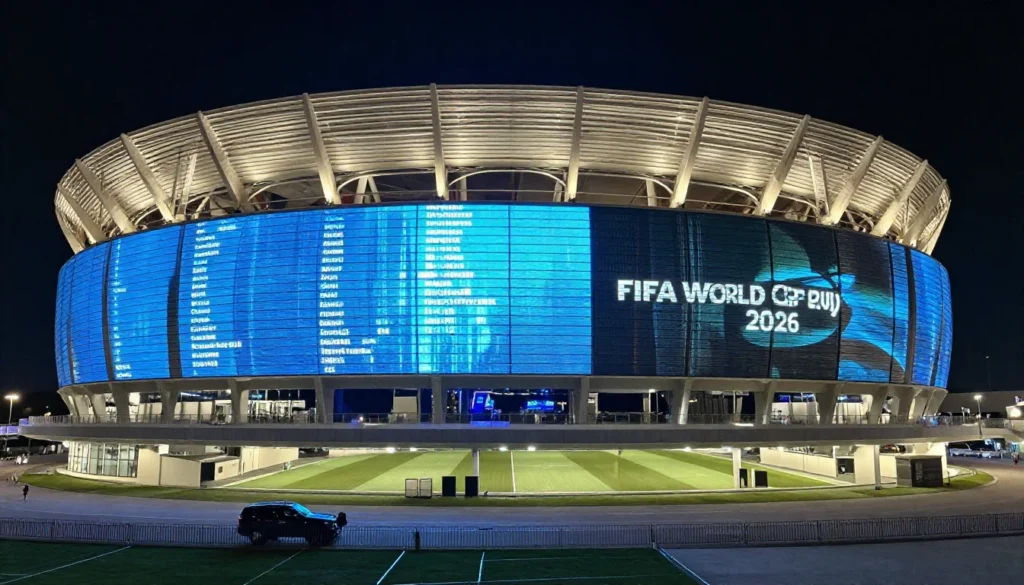
Mexico brings an emotional depth to this World Cup that is genuinely unmatched. The country co-hosted in 1970 and 1986, and now joins the party again in 2026. All three Mexican venues have their own identity, but they share the same burning passion for the beautiful game.
Estadio Azteca — The Home of Football History
City: Mexico City | Capacity: ~83,000 | Key Match: Opening Match (June 11, 2026)
No stadium in the world carries more football history than Estadio Azteca. It witnessed Diego Maradona’s Hand of God goal and his Goal of the Century in 1986. It hosted World Cup finals in both 1970 and 1986. Now, in 2026, it becomes the first stadium ever to host three FIFA World Cup opening matches — a record that will stand forever.
The opening match on June 11, 2026 is between Mexico and South Africa, and Azteca’s altitude of approximately 2,240 metres above sea level adds another layer of challenge and drama.
Estadio Guadalajara — Mexico’s Modern Marvel
City: Zapopan (Greater Guadalajara) | Capacity: ~46,232 | Key Match: Group stage and knockout matches
Estadio Akron, known as Estadio Guadalajara during the World Cup, is one of the most modern venues in Mexico. It is home to Club Deportivo Guadalajara, better known as Chivas, one of Mexico’s most beloved clubs. The stadium’s passionate local fan base will create an atmosphere that feels unlike anything else in the tournament.
Estadio Monterrey — The Mountain Backdrop
City: Guadalupe (Greater Monterrey) | Capacity: ~51,350 | Key Match: Group stage and knockout matches
Estadio BBVA, known as Estadio Monterrey for the World Cup, is set against the spectacular backdrop of the Sierra Madre mountains. It is home to Club de Fútbol Monterrey. This stadium earned a reputation as one of the most beautiful in all of Latin America, and its mountain views make it a uniquely photogenic World Cup venue.
Canada Stadiums: Two Cities, One Dream
Canada hosts its first ever men’s World Cup matches, and the country is ready. Two cities step up: Toronto and Vancouver. Together, they will stage 13 matches, including Canada’s own group stage games.
BMO Field — Toronto’s Soccer Home
City: Toronto, Ontario | Capacity: ~45,000 | Key Match: Canada vs Bosnia-Herzegovina opener (June 12, 2026)
BMO Field is the only soccer-specific stadium selected as a 2026 World Cup venue in the entire North American field. It opened in 2007 and is home to MLS side Toronto FC. Ahead of the World Cup, the stadium underwent a 145 million dollar renovation that increased capacity from 30,000 to 45,000, added four corner video boards, and upgraded the broadcasting suite.
For Canadians, this venue carries enormous emotional weight. It is where Canada clinched their Qatar 2022 World Cup qualification spot, ending a 36-year absence from the tournament. Now, it hosts Canada’s opening match of 2026, making it the starting point of a historic journey.
BC Place — Vancouver’s Waterfront Gem
City: Vancouver, British Columbia | Capacity: ~54,500 | Key Match: Canada vs Qatar (June 18, 2026) and more
BC Place in Vancouver holds the world’s largest cable-supported retractable roof. Set on the city’s stunning waterfront, it previously hosted the 2015 FIFA Women’s World Cup final. For 2026, BC Place underwent 180 million dollars in renovations, including a new natural grass pitch and expanded locker room facilities.
The venue hosts seven matches, including two of Canada’s group stage games. If Canada advances from the group stage, they could potentially play their knockout matches here as well, which would make Vancouver’s BC Place a landmark on Canada’s footballing history.
Key Matches and Where They Happen
Here is a summary of the most important fixtures and their venues:
| Match | Venue | Date |
|---|---|---|
| Opening Match (Mexico vs South Africa) | Estadio Azteca, Mexico City | June 11, 2026 |
| Canada’s Opener (vs Bosnia-Herzegovina) | BMO Field, Toronto | June 12, 2026 |
| USA’s Opener | SoFi Stadium, Los Angeles | June 12, 2026 |
| Philadelphia Independence Day Match | Lincoln Financial Field | July 4, 2026 |
| Semifinal 1 | AT&T Stadium, Dallas | July 14, 2026 |
| Semifinal 2 | Mercedes-Benz Stadium, Atlanta | July 14, 2026 |
| Third Place Match | Hard Rock Stadium, Miami | July 18, 2026 |
| World Cup Final | MetLife Stadium, New Jersey | July 19, 2026 |
What Makes These Stadiums Special?
A few things set the 2026 World Cup venues apart from any tournament before it.
Scale: The combined capacity of all 16 official venues reaches roughly 1.01 million seats. You will not find that kind of total in any previous World Cup.
Technology: Venues like SoFi Stadium and Mercedes-Benz Stadium represent the cutting edge of arena design. Features like massive video boards, climate control, and premium fan amenities raise the standard across the board.
History: Estadio Azteca alone carries more World Cup moments than most nations. Its presence gives 2026 a direct link to the very soul of the sport.
Natural Grass Everywhere: FIFA requires every match to be played on natural grass. Venues that normally use artificial turf — including MetLife, AT&T, Mercedes-Benz, NRG, Lumen Field, Gillette, and BC Place — all installed natural grass specifically for the tournament. That is a massive logistical achievement across 16 different venues.
Diversity: From the tropical Miami heat to the cool Pacific Northwest air in Seattle and Vancouver, the venues span climates, cultures, and landscapes. This variety makes the 2026 World Cup feel like a true continental celebration.
Tips for Fans Attending the Tournament
Here are some practical tips to help you make the most of the experience:
- Book early. Hotels near all 16 FIFA World Cup 2026 stadiums are already in high demand. Do not wait until the last minute.
- Download your mobile ticket before you enter the stadium. Public Wi-Fi inside large venues saturates fast. Rely on your mobile data plan once you are inside.
- Know the FIFA stadium names. FIFA uses sponsor-neutral names for each venue during the tournament. For example, AT&T Stadium becomes Dallas Stadium, and SoFi becomes Los Angeles Stadium. Keep that in mind when reading schedules and signage.
- Plan for altitude in Mexico. Mexico City’s Estadio Azteca sits roughly 2,240 metres above sea level. If you are attending matches there, give yourself time to acclimatise, stay hydrated, and take it easy on arrival.
- Use public transport. Most host cities offer enhanced transit options during the tournament. Driving to a stadium with 80,000 people inside it is rarely a good idea.
- Arrive early. Security checks at FIFA World Cup stadiums are thorough. Give yourself at least 90 minutes before kickoff to clear security and find your seat.
Conclusion
The FIFA World Cup 2026 stadiums are not just venues. They are the stages on which football history will be written. From the moment Mexico kicks off against South Africa at Estadio Azteca on June 11 to the final whistle at MetLife Stadium on July 19, every one of these 16 arenas will play its part in the most ambitious World Cup the world has ever seen.
You now have the full picture. You know which stadium hosts the final, which venues stage the semifinals, and why Canadian fans will be watching BMO Field with particular pride. Whether you are planning a trip to North America or settling in for a summer of football, these stadiums are where the drama unfolds.
Which FIFA World Cup 2026 stadium are you most excited about? Drop your thoughts and share this guide with every football fan you know.
FAQs
Q1. How many stadiums will host the FIFA World Cup 2026? A total of 16 stadiums across three countries will host matches at the 2026 FIFA World Cup. The USA contributes 11 venues, Mexico contributes 3, and Canada contributes 2.
Q2. Which stadium will host the FIFA World Cup 2026 final? The final will take place at MetLife Stadium in East Rutherford, New Jersey, on July 19, 2026. FIFA calls it the New York New Jersey Stadium during the tournament. It holds approximately 82,500 spectators in its World Cup configuration.
Q3. Where is the FIFA World Cup 2026 opening match being played? The opening match is at Estadio Azteca in Mexico City on June 11, 2026. It features Mexico vs South Africa. Azteca becomes the first stadium in history to host three separate World Cup opening matches — having done so in 1970, 1986, and now 2026.
Q4. What is the largest stadium at the 2026 World Cup? AT&T Stadium in Arlington, Texas (FIFA name: Dallas Stadium) is the largest venue, with a capacity that can reach approximately 94,000 spectators. It also hosts a 2026 World Cup semifinal.
Q5. Which 2026 World Cup stadiums are in Canada? Canada has two venues: BMO Field in Toronto, Ontario, and BC Place in Vancouver, British Columbia. Together they host 13 matches, including all of Canada’s group stage games.
Q6. Is Estadio Azteca the most historic World Cup venue in 2026? Yes, without question. Estadio Azteca in Mexico City has hosted two previous World Cup finals (1970, 1986) and numerous iconic moments. It is making history again as the only stadium ever to host three World Cup opening matches.
Q7. What changes did stadiums make for the 2026 World Cup? Most NFL venues replaced artificial turf with natural grass, as required by FIFA. Several Canadian venues also underwent major renovations. BMO Field expanded from 30,000 to 45,000 seats with a 145 million dollar renovation, and BC Place received 180 million dollars in upgrades including a new natural grass pitch.
Q8. Where are the 2026 World Cup semifinals being played? Both semifinals take place on July 14, 2026. Semifinal 1 is at AT&T Stadium in Dallas, Texas. Semifinal 2 is at Mercedes-Benz Stadium (Atlanta Stadium) in Atlanta, Georgia.
Q9. Why do FIFA World Cup 2026 stadiums have different names? FIFA requires all venues to use sponsor-neutral geographic names during the tournament. This means commercially named stadiums use alternate titles. For example, SoFi Stadium becomes Los Angeles Stadium, and Mercedes-Benz Stadium becomes Atlanta Stadium.
Q10. How many total matches will be played at the 2026 World Cup? A total of 104 matches will be played across all 16 host venues over 39 days, from June 11 to July 19, 2026. This is the largest number of matches in World Cup history, made possible by the expansion from 32 to 48 teams.
About the Author
James Keller is a football writer and sports journalist with over eight years of experience covering international football tournaments, including multiple FIFA World Cups. He specializes in stadium culture, fan travel, and the business of football. James writes for several major sports publications and believes that knowing your venues is the first step to truly experiencing the beautiful game.