The Ohio vs Virginia class submarine comparison highlights two different approaches to American undersea warfare. Ohio-class guided-missile submarines (SSGNs) were converted from ballistic-missile submarines to carry enormous conventional missile payloads, while Virginia-class nuclear-powered attack submarines (SSNs) combine stealth, intelligence gathering, anti-submarine warfare and precision strikes.
As of October 2026, the comparison has an important new development: on August 3, 2026, the U.S. Navy announced plans to reclassify 19 Virginia-class submarines equipped with the Virginia Payload Module (VPM) as guided-missile submarines. This changes their designation and reflects their expanded strike role, but it does not make them identical to the much larger Ohio-class SSGNs. Source: U.S. Navy.
The central difference remains straightforward: an Ohio-class SSGN can carry up to 154 Tomahawk cruise missiles, compared with a maximum of approximately 40 Tomahawks for a Virginia-class Block V submarine equipped with VPM and its forward payload tubes.
Ohio vs Virginia Class Submarine: Key Differences at a Glance
The Ohio-class SSGN is optimized for heavy missile strikes and special operations support. The Virginia class is designed for a broader range of missions, with advanced sensors, stealth and flexible weapons systems.
| Feature | Ohio-class SSGN | Virginia-class Block V |
|---|---|---|
| Primary role | Large-scale conventional strikes and special operations | Attack warfare, intelligence and precision strikes |
| Length | Approximately 560 feet | Approximately 461 feet with VPM |
| Submerged displacement | Approximately 18,750 tons | Approximately 10,200 tons with VPM |
| Maximum Tomahawk capacity | 154 missiles | Approximately 40 missiles |
| Torpedo armament | Four torpedo tubes | Four torpedo tubes |
| Special operations | Dedicated accommodations and lockout facilities | Can support special operations, including with compatible equipment |
| Propulsion | Nuclear-powered | Nuclear-powered |
| Fleet outlook | Legacy SSGN force approaching retirement | Production and modernization continue |
Figures are approximate. Missile capacity refers to maximum design capacity, not necessarily the weapons loaded on every deployment. Specifications vary by submarine configuration. Sources: U.S. Navy attack submarine fact file and U.S. Navy guided-missile submarine fact file.
What Makes Ohio-Class Guided-Missile Submarines Different?
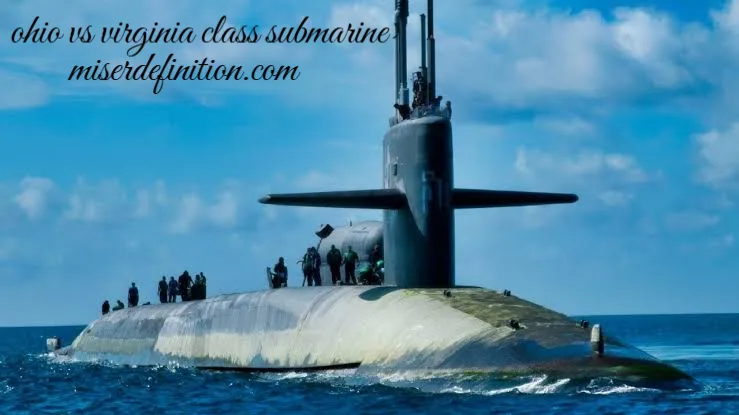
Ohio-class SSGNs are among the most heavily armed conventional-strike submarines in the U.S. Navy. Four boats were converted from their original ballistic-missile configuration into guided-missile platforms during the 2000s.
The converted submarines are USS Ohio (SSGN-726), USS Michigan (SSGN-727), USS Florida (SSGN-728) and USS Georgia (SSGN-729).
Their defining feature is their ability to carry up to 154 Tomahawk Land Attack Missiles (TLAMs). The original missile compartments accommodate seven-shot canisters in up to 22 tubes, giving each submarine exceptional concentrated firepower.
Beyond missile strikes, Ohio-class SSGNs can support Special Operations Forces (SOF). Their converted missile compartments provide additional personnel accommodations, while dedicated lockout chambers and compatible Dry Deck Shelter systems facilitate the covert deployment and recovery of personnel.
This combination makes the Ohio SSGN more than a missile carrier. It can serve as a stealthy launch platform, a special operations support vessel and a flexible asset for extended deployments.
However, the class is aging. USS Georgia completed its final deployment in July 2026 and was scheduled to leave the fleet, marking a significant reduction in the Navy’s legacy SSGN capability. The retirement of the remaining Ohio-class guided-missile submarines will create a transition challenge as newer platforms assume their missions.
How Much Firepower Does the Virginia-Class Submarine Have?
Virginia-class submarines emphasize versatility rather than maximum missile volume. They conduct anti-submarine warfare, anti-surface warfare, intelligence collection, surveillance, reconnaissance and land-attack missions.
Earlier Virginia-class boats use 12 individual vertical launch system (VLS) tubes. Beginning with SSN-784 and later boats, the design uses two larger Virginia Payload Tubes, each capable of accommodating six Tomahawk missiles through multiple-round canisters.
The Virginia Payload Module adds another major improvement. Installed in a longer hull section on designated Block V submarines, VPM contains four large-diameter payload tubes, each capable of carrying seven Tomahawks.
That creates the following theoretical capacity:
- Forward payload tubes: 12 Tomahawk missiles.
- Virginia Payload Module: 28 additional Tomahawk missiles.
- Total: approximately 40 Tomahawk missiles.
This is a substantial increase over the 12-missile capacity of earlier Virginia configurations. It also provides flexibility for future weapons and other payloads, including unmanned systems.
Nevertheless, a VPM-equipped Virginia submarine carries roughly one-quarter as many Tomahawks as an Ohio-class SSGN at maximum capacity. That difference matters during campaigns requiring numerous simultaneous missile launches or repeated strikes against widely distributed targets.
Why Is the Virginia Payload Module Important?
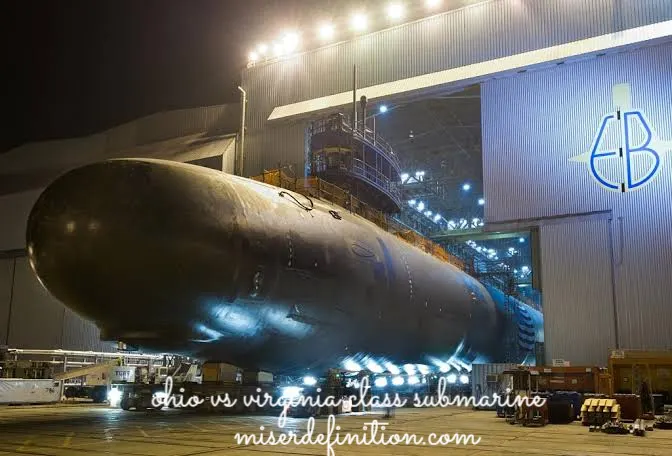
The Virginia Payload Module is a major part of the Navy’s submarine modernization program. Instead of developing an entirely new submarine solely to increase conventional strike capacity, the Navy incorporated a larger payload section into the existing Virginia-class design.
VPM offers three important advantages.
1. Greater missile capacity. Four additional payload tubes provide space for 28 more Tomahawks, increasing the submarine’s total theoretical capacity to about 40.
2. Room for future weapons. Larger payload spaces provide flexibility for evolving submarine-launched missiles and other undersea systems as the Navy develops future capabilities.
3. Additional mission flexibility. The module’s design supports compatible special operations equipment, including Dry Deck Shelter capabilities, and provides additional interfaces for payloads.
VPM therefore helps close the gap between attack submarines and the retired or retiring Ohio-class SSGNs. It does not, however, reproduce the Ohio’s 154-missile magazine.
Can Virginia-Class Submarines Replace Ohio-Class SSGNs?
Not on a one-for-one basis. Virginia-class submarines can take on many Ohio SSGN missions, but the differences in size, missile capacity and internal configuration prevent a simple substitution.
The Navy’s August 2026 decision to designate 19 planned VPM-equipped Virginia-class boats as SSGNs reflects their expanded conventional-strike role. This is a meaningful change in the service’s submarine classification and modernization strategy.
Yet three distinctions remain important.
First, the missile magazines differ significantly. A single Ohio-class SSGN can carry 154 Tomahawks, compared with approximately 40 on a VPM-equipped Virginia. Matching the Ohio’s maximum missile load would require multiple Virginia-class boats, assuming all their relevant payload spaces were loaded with Tomahawks.
Second, the Ohio’s larger hull and dedicated accommodations support a different scale of special operations activity. Virginia-class submarines offer useful SOF capabilities, but their internal arrangements are not identical.
Third, reclassification does not instantly create additional submarines. The Navy still needs to build, deliver, maintain and crew its planned VPM-equipped boats. Their practical contribution depends on availability, readiness, weapons stocks and mission requirements.
The better interpretation is that the Virginia-class is becoming a more capable guided-missile force, not that it has become a direct physical equivalent of the Ohio SSGN.
Why Does the U.S. Navy Need More Guided-Missile Submarines?
The Navy needs submarine-launched strike capacity because submarines can approach contested regions while remaining difficult to detect. They can launch conventional precision weapons without relying entirely on surface ships or aircraft operating close to hostile defenses.
A strong undersea strike force supports several objectives:
- Long-range conventional strikes: Tomahawk missiles can attack land targets from sea-based launch platforms.
- Distributed Maritime Operations: Distributing weapons and sensors across multiple platforms can complicate an adversary’s defensive planning.
- Deterrence: A survivable undersea force creates uncertainty for opponents considering aggression.
- Special operations: Suitable submarines can deploy and recover personnel in contested environments.
- Operational flexibility: Nuclear-powered submarines can remain submerged for extended periods without needing to refuel their reactors during ordinary operations.
The Ohio-class SSGNs have provided a particularly large magazine for these missions. As they retire, the Navy must decide how to distribute that firepower among VPM-equipped Virginia submarines, surface combatants, aircraft and future weapons platforms.
The answer is not simply a larger number of submarines. It is a balance of magazine capacity, stealth, availability, targeting information and the ability to reload and sustain weapons operations.
What Is the Biggest Challenge Facing the Future Submarine Fleet?
One of the most important constraints is industrial capacity. The Navy needs to build Virginia-class attack submarines while also advancing the Columbia-class ballistic-missile submarine program, which has priority because of its strategic nuclear deterrence mission.
A Government Accountability Office report published April 22, 2026, said Virginia-class construction was progressing at roughly one submarine per year as of June 2025, half the Navy’s goal of two annually. The two Virginia-class boats accepted in 2025 were each more than three years late. The report also identified workforce, supplier and industrial-base challenges. Source: GAO.
These delays matter because the submarine force cannot replace retiring platforms merely by announcing a new designation or approving an upgrade. Ships must be completed and delivered before they can contribute to operational availability.
Industrial-base investment, skilled-worker recruitment, reliable component deliveries and better production planning will all influence the pace at which VPM-equipped boats enter service.
The Navy’s broader challenge is to preserve undersea combat power during the transition: maintaining existing submarines safely, delivering new boats on time and ensuring crews have the weapons and training required for their missions.
source: nti.org
What Does This Mean for the Future of U.S. Undersea Strike Power?
The future force will likely rely on a mix of platforms rather than a single direct replacement for the Ohio SSGN.
Virginia-class Block V submarines bring improved missile capacity while retaining the stealth, sensors and versatility of an attack submarine. The 2026 reclassification signals that the Navy intends to emphasize the strike role of VPM-equipped boats more explicitly.
But the Ohio SSGN’s retirement exposes a practical problem: fewer missiles may be available in a single submarine’s magazine even as the fleet gains newer and more adaptable platforms.
The long-term result will depend on how many VPM-equipped submarines become operational, how quickly the industrial base can deliver them, and how the Navy integrates undersea weapons with other strike assets.
Bottom line: Ohio-class SSGNs remain the clear leaders in maximum Tomahawk capacity per submarine. Virginia-class Block V boats offer a more flexible and modern platform, and their new SSGN designation reflects an expanded strike mission. The key measure of success will be whether the Navy can maintain sufficient ready, survivable and deployable firepower as its legacy missile submarines leave service.
Custom FAQ Section
1. What is the Columbia-class submarine?
The Columbia class is the U.S. Navy’s next-generation nuclear-powered ballistic-missile submarine (SSBN). It is being developed to replace the aging Ohio-class ballistic-missile submarines that carry nuclear weapons. Unlike Ohio-class SSGNs and Virginia-class attack submarines, its primary mission is strategic nuclear deterrence.
2. What is the Seawolf-class submarine?
The Seawolf class is a U.S. Navy nuclear-powered attack submarine class designed for exceptional underwater speed, stealth and combat capability. Only three were built: USS Seawolf (SSN-21), USS Connecticut (SSN-22) and USS Jimmy Carter (SSN-23). The class is larger and more specialized than the Virginia class, but its limited production means it does not form the backbone of the current attack submarine fleet.
3. What are the main U.S. submarine classes?
The principal U.S. Navy submarine classes include:
Ohio class: Ballistic-missile submarines and converted guided-missile submarines.
Virginia class: Modern nuclear-powered attack submarines.
Seawolf class: Advanced nuclear-powered attack submarines built in limited numbers.
Los Angeles class: Older nuclear-powered attack submarines, many of which have been retired.
Columbia class: Next-generation ballistic-missile submarines under development and construction.
These classes serve different missions, so their size, weapons and operational priorities are not directly interchangeable.
4. Which U.S. submarines are currently active?
The active U.S. submarine fleet includes boats from the Ohio, Virginia, Seawolf and Los Angeles classes, with individual status changing as vessels enter service, undergo maintenance or retire.
Ohio-class submarines serve in two distinct roles: some remain ballistic-missile submarines, while the converted SSGNs carry conventional cruise missiles. USS Georgia’s departure in 2026 reduced the legacy SSGN force, while the Virginia class continues to expand. The Columbia class is intended to replace Ohio-class ballistic-missile submarines, not perform the same conventional-strike role as the SSGNs.
For a current hull-by-hull inventory, consult the U.S. Navy’s official submarine force information.
5. What are the U.S. submarine classes ranked by size?
Approximate submerged displacement provides a useful comparison, although the exact ranking depends on the submarine’s configuration.
Submarine class and configuration
Approximate submerged displacement
Ohio class
18,750 tons
Columbia class
Approximately 20,800 tons projected
Virginia class with VPM
10,200 tons
Seawolf class
Approximately 9,100 tons
Los Angeles class
Approximately 6,900 tons
These are approximate figures, and the Columbia-class figure is a projected design value rather than a measurement from an operational boat. The Ohio class remains substantially larger than the Virginia class, allowing the SSGN configuration to accommodate a much greater conventional missile load.
Also Read